
Hearing aid prices in Canada
Learn about what is included in the cost of hearing aids and how an investment in better hea can change your life.
Key points:
The average cost of a hearing aid ranges from $1,000 to $5,500. This often
includes ongoing care from a hearing practitioner or audiologist.You may be eligible for hearing aid financial assistance through your region,
job or insurance.
Find a clinic near you for local hearing aid prices.
How much are hearing aids?
Hearing aid prices can be steep for many Canadians. The price of hearing aids in Canada can range from $1000 to over $5500 per device. Prices vary a lot depending on the type of hearing aids you buy and what kind of hearing care is included as part of the purchase. A lot of factors contribute to the price, including:
Style and technology
Professional service
Online retailers and store
Repairs and servicing
Research and development
You may be eligible for financial assistance through private insurance or government funding. Ask a hearing professional how much a hearing aid would cost you.
Cost should never be a barrier to better hearing, which is connected to a higher quality of life. Research links untreated hearing loss to fatigue, anxiety, depression, social isolation and frustration. Many hearing loss sufferers can reduce these effect with the right hearing aids.
Researchers have also associated hearing loss with cognitive decline. Hearing aid use may help delay cognitive decline or improve cognitive function. Some studies show an improvement in cognitive skills and memory after six months of hearing aid use.
When it comes to treating hearing loss, hearing aids are typically the recommended
treatment.
Does insurance cover hearing aids?
Most regions in Canada offer financial aid to help cover the cost of hearing aids, especially for seniors.
Many clinics offer hearing aid payment plans. If you have health insurance, it may offer hearing aid coverage as well.
Hearing aids are a medical expense and are often income tax deductible. Some provinces assist in partial hearing aid funding through a government grant.
Each region also has a Workplace, Safety and Insurance Board (WSIB) that may cover the cost of hearing aids.
This goes for Veterans Affairs Canada and Canadians with First Nation status. Those who have limited monthly income or disabilities can also reach out to their region for assistance.
Why are hearing aids so expensive?
There are five major factors that help explain why hearing aid prices are so high.
1. Style and technology
Hearing aid prices vary based on their level of technology. For example, those with profound hearing loss need powerful, nuanced technology to treat their loss. The more powerful the software, the more it costs.
Premium hearing aids have the highest amount of background noise reduction. They will seek out and amplify important speech cues. They also have high-end software.
This software allows many adjustments based on your needs and lifestyle. Basic hearing aids have little to no background noise reduction. They also have fewer adjustment options.
Hearing aid types and styles may affect cost as well. Hearing aids are available in several styles including:
Invisible in the ear canal (IIC)
Completely in canal (CIC)
In the canal (ITC)
In the ear (ITE)
Behind the ear (BTE) and
Receiver in the ear (RITE).
If your hearing aid is mild to moderate, a hearing aid that fits in the ear canal may be best for you. Ultimately, you should choose hearing aids that best suit your hearing loss and personal lifestyle.
2. Professional service
When you buy hearing aids from a hearing clinic, you also pay for the expertise of a professional. He or she will counsel you on your hearing needs. They will ensure you are receiving the proper care and that you enjoy your hearing aids.
Reputable clinics and healthcare professionals provide follow-up care. They will tell you to contact them immediately with any questions or if any issues arise. They will see you in person to ensure you are comfortable and having success with your hearing aids.
Hearing aids are unlike prescription glasses. Prescription glasses often do not need further adjustments until the prescription changes. People often adjust to new glasses in a few hours to days with little to no trouble.
People typically seek professional advice as soon as they start having vision issues. Yet, people wait up to seven years before seeking help for their hearing.
Many clients do not adjust to their hearing aids immediately. A client may revisit the clinic two or three times for counselling and adjustments.
In fact, clients may return around four to five times within their warranty period. They do this to ensure their hearing aids are being adjusted to their ever changing needs.
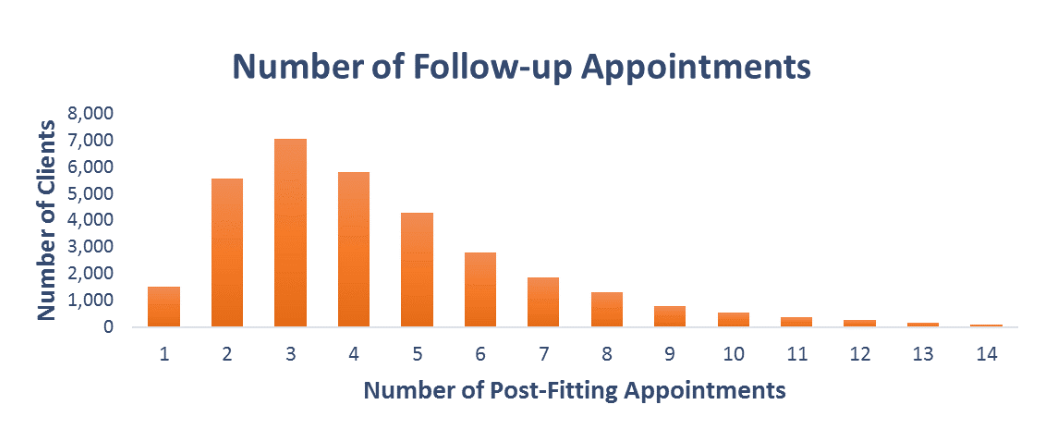
Source: Based on follow-up visits from new hearing aid wearers to
HearingLife clinics from Jan-Dec 2017.
Hearing aids are intricate and complex devices. They need maintenance, cleaning an repair over time. Even Health Canada recommends professional monitoring for medical devices like hearing aids.
3. Online and big retail stores
You may choose to buy hearing aids online or at a big retailer as a less expensive option. Online varieties tend to be more affordable because they cut out important servicing. These devices also have inferior software, limiting the potential of your listening experience.
Canadians cannot currently buy hearing aids online. But, online hearing amplifiers have been available for years.
Some hearing amplifiers may look like hearing aids, but they are not regulated the same. Hearing amplifiers can boost sound, but are not recommended to treat hearing loss. They are not fitted for your specific hearing needs.
Some online companies offer tutorials on how to clean their devices and tips on getting used to them. There is nothing customized about this.
Each client is unique and requires different adjustments and counselling. There are many clients who cannot use stock ear tips and need custom options. These are unavailable online. And although there are over-the-counter hearing aids in the U.S., you still need an official hearing loss diagnosis to buy hearing aids in Canada.
Big retail stores sell store-specific branded hearing aids. These hearing aids can only be programmed at that store.
These stores provide a limited amount of hearing aid options. Hearing clinics provide a wide variety of hearing aid brands that may be better suited to your hearing needs
4. Repair and servicing
Reputable clinics will only sell hearing aids made in Europe or North America.
They will also usually have a repair facility in the same country you live in. This increases the turnaround time should your hearing aids need an out-of-clinic repair.
Most clinics include repair and warranty services in the hearing aid price. Hearing aids need maintenance, cleaning and repair over time. This included warranty will assist with that.
5. Research and development
Hearing aids have experienced the greatest leap in technological advancements in recent years.
They are now wireless and compatible with smartphones. You can stream phone calls and music right through your hearing aids.
You can even use iPhones and Android phones to change your hearing aid settings. You can also track your hearing aids should they ever get lost.
Hearing aids communicate with each other to ensure the user is always hearing speech above background noise. It costs manufacturers millions of dollars each yea to improve on this technology.
The technology must be powerful and still fit in a tiny hearing aid casing. So, a significant part of the cost of hearing aids goes toward research and development.
Questions to ask before purchasing hearing aids
Before you buy a hearing aid, ask your hearing care provider the following question They will help you choose the right hearing aid, and the right hearing clinic for you.
1. Which hearing aids are best suited for my hearing loss and lifestyle?
2. Do I have a trial period?
3. Where are the hearing aids made, and where can I get them repaired?
4. What type of warranty will come with my hearing aids?
5. Are there other costs?
6. How often should I come back to have my hearing aids cleaned and adjusted?
7. How long will my hearing aids last?
8. If I am travelling or relocating, can I get my hearing aids serviced at a different clinic?
9. Do you use verification equipment to ensure my hearing aids are set for me/ . Hearing aids are an important investment. They can improve your quality of life, relationships and general health.
Written by
Athena Leone
BA, (Hons)
BA (Hons)., HIS, Reg. AHIP, Hearing Instrument Specialist, and Shantelle Shakes, BA (Hons)., Hearing Health Information Coordinator, Hearing Directory Reviewed by Chelsea Kuhn-Grise, Hearing Instrument Specialist Last updated on: February 21st, 2025